I saw this adder mating back in May. Since then it has been basking in the same place most days. Then this morning there were three baby adders curled up in the grass next to it!
The adder breeding season is one of my favourite fixtures in the nature-watching calendar. Just for a few days of fine weather in the late spring, the female adders go into heat very like a dog or cat, and all the male adders in the area are drawn in.
Adder - Vipera berus. Two males jostling for position by a female (the brown snake)
The males have a particlar wrestling 'dance' which they perform to determine which of them is the stronger. The winner chases off the loser and returns to guard the female from all comers.
I see adders throughout the warmer months of the year, but this is the only time when they are very active and not at all shy about human onlookers.
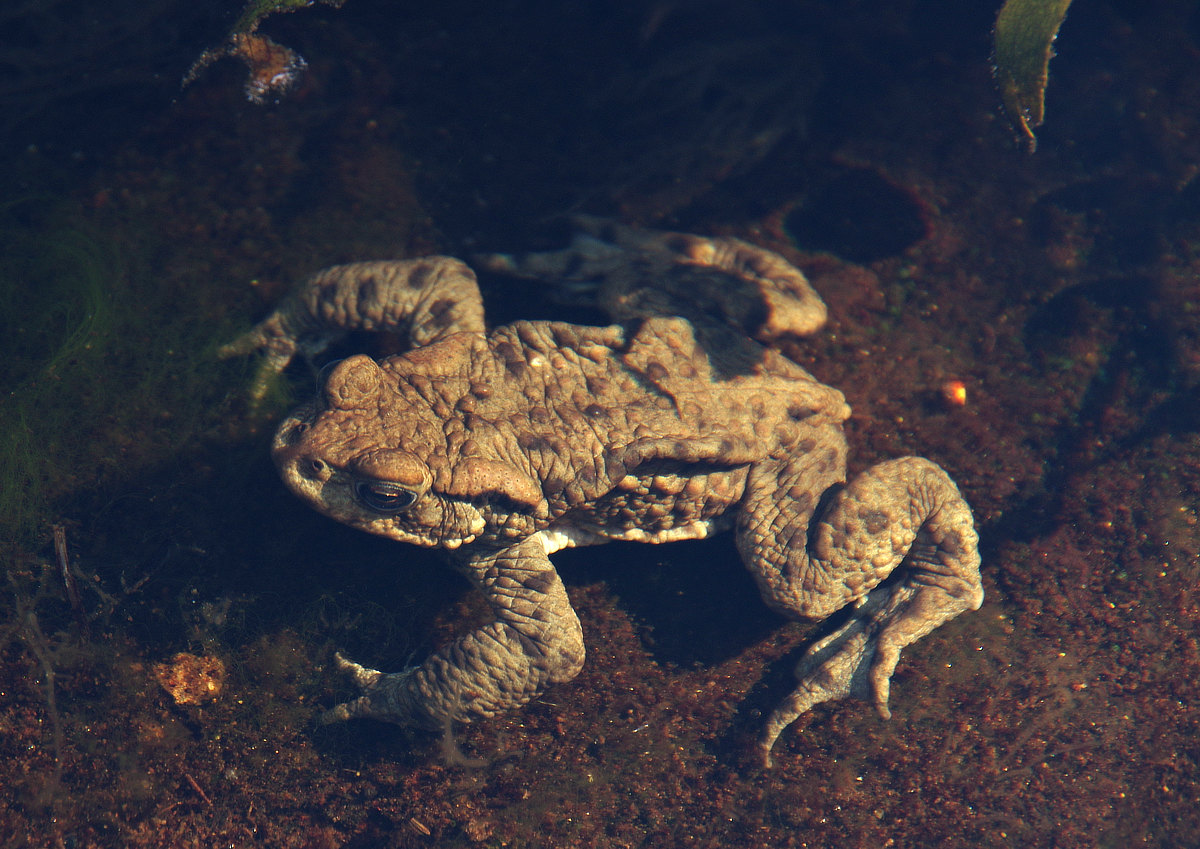
Here's a few photos of the male frogs - Rana temporaria - hanging around by the breeding puddles on the forestry track behind my house. For most of the year they are pretty shy and difficult to photograph, but with spawning season in full swing, they have more important things to worry about than hiding from photographers!
I had been watching the ootheca of a springbok mantis - Miomantis caffra - on the wall next to my front door since I moved in here five months ago, then suddenly, last week it was covered in a swarm of tiny little mantis nymphs, each about 7mm long.
There were twenty on the first evening. With smaller numbers emerging over the next three days - all in the late afternoon.
I caught the hatching process on video a couple of times, but it is a long, slow process - emerging as a worm-shaped thing, and then wriggling to unfurl their limbs.
They then hang around on the ootheca until they have hardened and turned brown, after which they mostly seem to wait nearby until nightfall before dispersing.
These little guys still have a way to go to become a fully-fledged adult:
I first read about velvet worms - aka. peripatuses - in Stephen Jay Gould's Wonderful Life - a book about the burgess shale fossils (among other things) and immediately went to look them up on youtube and wikipedia. They are beautiful creatures that, unfortunately, live nowhere near scotland.
Peripatoides novaezealandiae - Peripatus
However I had noted that they do live in New Zealand, so when I decided to take a trip to Auckland, peripatus went straight to the top of my list of things to see!
Over the weeks and months of looking under logs and asking people, I slowly came to the realisation that they are a pretty rare and hard to find animal in New Zealand. Perhaps their range and fecundity have been affected by the massive environmental upheavals of the last few centuries - like so much of the rest of the native fauna.
After three months of nothing, I eventually engaged the enthusiasm of a very experienced local bush man, who had seen peripatuses before and thought he might know a likely spot in the Waitakere ranges.
Peripatoides novaezealandiae - Peripatus
Sure enough, under the first log we looked at we found a small, formless, velvety blob. As I held it in my hands, it extruded feelers and legs and elongated until there was a fully formed, caterpillar-like creature gliding sinuously over my palm.
We placed it back on its log, and took some photos and videos as it walked about. They are nocturnal, and it was obviously uncomfortable being out and about during daylight on a cold winter's day.
Although we continued looking, that was the only velvet worm we found, and it may be a very long time before I see one again.
Viscachas are south american rodents related to chinchillas, they look like a cross between a rabbit and a wallaby, with more eye-liner than either of the above.
Adders will bask even when the sun is occluded by thick cloud as part of their thermoregulatory regime, though they tend to bunch up into tighter coils as the amount of solar radiation decreases.
Unlike most other European snakes, male and female adders can usually be distinguished by their scale colour - males being greyish with black markings while females are brownish with dark brown markings. However, both sexes show very varied colouration. The female above looking really quite grey, while males often have greyish, rather than black markings. Below is a male adder for reference.